Browsed by
Category: Musings

The Mundanity of Excellence

The Mundanity of Excellence

A few weeks ago, I stumbled upon an article called The Mundanity of Excellence: An enthnographic report on stratification and Olympic swimmers. It examines the question of ‘What makes people excellent?’ by assessing the differences in practices, habits and mindsets of swimmers at different levels. The general message is that everyone can be excellent with the right set of practices, rather than some obscure notion of ‘talent’, an encouraging message for all. Here are 3 key takeaways.


1. Excellence comes from qualitative, not quantitative differentiation.

World-class swimmers don’t necessarily train longer or work harder than average swimmers. What differentiates the best from the rest, the author argues, is differences in quality. The best swimmers tend to be more mindful of their technique, rock up to training on time, sleep regular hours and watch what they eat.

This idea makes sense. There’s no use training 5 hours a day in a pool with incorrect technique: you’d be training the wrong thing, engraining the wrong skills. However, I suspect there is a balance here between quality and quantity. In his book Outliers, Malcolm Gladwell notes this observation for classical musicians:

Their research suggests that once a musician has enough ability to get into a top music school, the thing that distinguishes one performer from another is how hard he or she works. That’s it. And what’s more, the people at the very top don’t work just harder or even much harder than everyone else. They work much, much harder.

2. Excellence comes from differences in attitude.

The features that an average swimmer finds unpleasant, the top swimmer enjoys. What others see as boring – swimming back and forth over a black line for two hours, say – the top performers find peaceful, even meditative. Those that are excellent enjoy hard practices, look forward to difficult competitions and set difficult goals.

From a running perspective, this idea is familiar. Some of the top runners at my Uni running club do 30km long runs on the weekend. Once, I asked them how they do it every week and if they get bored of it. I remember their confused faces staring back at me. “We don’t do it for work,” they said. “We do it because it’s relaxing and it’s fun.”


3. Excellence is mundane.

This is the main point of this article – that there’s really nothing ‘special’ about high achievers. They just have this set of practices, habits and mindsets that when added and compounded together over time, result in the phenomenon of excellence. The notion of ‘talent’ is essentially meaningless and is just a lazy way of saying, ‘we don’t know how they did it.’ The author argues that if we took the time to investigate what makes a top performer excellent, we’d find a set of practices that if we wanted to, could apply to our own lives for similar results. It’s really quite mundane. In his conclusion, he writes:

But of course, there is no secret. There is only the doing of all those little things, each one done correctly, time and again, until excellence in every detail becomes a firmly ingrained habit, an ordinary part of one’s everyday life. 
Restless Searches for Meaning

Restless Searches for Meaning

Disclaimer: The following post is dark, with themes of meaninglessness and suicide rearing their heads. I’ve put off writing this for some time now, but a part of me urged me to do it, partially to confront my own demons, but also to reassure others that they’re not alone in distressing moments. Honestly, my mental health is fine, but episodes like what you’re about to read do occur from time to time; I suspect that for others, this dialogue is hauntingly familiar in little ways. Remember, there is always someone you can talk to: you are not alone.


2am.

Or something around there – I’m not too sure. But it’s definitely been a while since the kindle got put away, the lights got turned off and I hopped into bed, which was around 1:30am. Taking that nap in the afternoon was definitely a mistake, I think to myself.

As the night progresses, still wide awake, something slowly but surely begins clawing its way into my head. It’s my inner darkness, one which loves to do nothing more than throw everything I know and believe into chaos. Usually, I keep a tight lid on it but tonight, my defences are down. The darkness lunges at the opportunity, slithering into my thoughts with its sickly-sweet voice.

Hi Eric, how’s it going? Done anything special recently?

It’s a trick-question, one meant to lower my guard. The best way to deal with this is simply to ignore it and not let the voice get what it wants. But despite my best efforts tonight, the darkness doesn’t let go – perhaps it senses my vulnerability. Finally, I give in.

Look, I have a meeting tomorrow morning and I’d like to sleep right now if that’s alright. Can you go away please?

Oh, so you think your meeting tomorrow is more important than what I’ve got to say to you? No, stay child – and listen carefully.

I already know what’s coming, but before I can shut the darkness away or brace myself, the onslaught begins.

Look here, everything is meaningless. One day, you, your family, your friends and everyone you care about will die and be forgotten. Time and death are two relentless forces that won’t stop for anyone. You know what this means? NOTHING YOU ACHIEVE IN YOUR LIFE WILL MATTER. You’ll be forgotten, just like the billions of people that have died before you. And you think you’ll change the world? Hah, believe me, you’re just nowhere near as special as you think. There are SO many kids smarter, more driven and with better opportunities than you that will go on to achieve successes you could only DREAM about. No, Eric you’re as ordinary as they get. WAKE UP.

Ah yes, good old nihilism. It’s an uncomfortable argument, but one which I’ve come to terms with over time. The dance between us continues, in a variation that’s been played out before.

Well, I see where you’re coming from and indeed, it does seem depressing. However, I believe in a God who created heaven and Earth; one which gives meaning for people’s existence and real value on my own and others’ lives. This means that-

This whole Christian thing again? Let’s be honest, you don’t really believe in God. I mean, when’s the last time you shared the gospel to someone? If you really believed, you’d be declaring the ‘Good News’ to all the corners of the Earth. Yet here you are, living a comfortable and selfish life in your 2-bedroom apartment. You’re as fake as they get, admit it.

Okay, I agree that I could be doing more to share my faith and I’m working on it thanks for the reminder. But I also understand that you don’t have to necessarily tell the gospel to evangelise, and I trust God’s plan to manifest itself in everyone eventually. How-

God’s plan?! How do you even know your God exists? Look at the times you’ve felt closest to God – a death in your family, a close friend’s conversion. It’s just your unconscious responding to emotional experiences: exactly Freudian psychology in motion! Stop using God as a defence mechanism, a replacement father figure, and just come to terms with the truth: life is cruel, meaningless and has no explanation.

Oh, so you want to bring up Freud? You know that psychoanalysis has no credible evidence behind it – can a case study here and there really be applied to everyone? Isn’t believing in psychoanalysis a form of improvable faith in itself?

Oh, tricky, tricky. Look, you can believe whatever you want but I promise you, you’re deluding yourself. You could jump off your balcony head first right now and crack open your skull and the world wouldn’t notice. You’ll be remembered for an infinitesimal amount of time before everyone that cares about you dies as as well, where you become just another number on a stats website for suicide.

So should I just kill myself then? Is that the only path ahead for a nihilist?

The darkness inside me pauses. It doesn’t want to die – not right now. I suspect that under all this bravado, the voice is simply searching for its own sense of meaning. A yearning for a reason behind the suffering, the chaos and the evil in the world we live in. In its pursuit for meaning and realising nothing the world had to offer was enough, part of it resigned itself to nihilism, and now aims to take down the rest of me with it. But I sense some part of the darkness is still desperately hanging onto a possibility of meaning within this space of randomness, which may justify living just one more day.

The voice finally leaves, and I lie silently for a while, still awake. Eventually, after what seems like another hour, sleep manages to find and wrap itself around me, until I finally fall prey into the bizarre world of dreams and nightmares.

Defending Inputs

Defending Inputs

Beware the stories you read or tell; subtly, at night, beneath the waters of consciousness, they are altering your world.

– Ben Okri

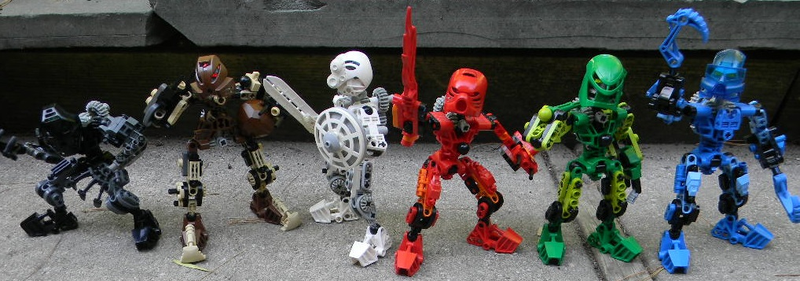
When I was a kid, I used to obsess over this type of Lego called Bionicles. It was more than just blocks and pieces, there was this whole universe about it – movies and comics with heroes and villains and twists and turns, and 5-year old me devoured it all. When I went to Big W with my parents, I would always beg them to buy me a new Bionicle to play with. And usually, out of what I now suspect was a ploy to get me to pipe down, they complied. Little did they know how much these toys would take over my time, thoughts and obsessions.

From the ages of 5 to 7, hours each night were spent on my bedroom floor with swarms of Bionicles pieces in front of me. During these hours, I’d create epic battle scenes, new ‘hybrid’ Bionicles and a complex story with my figures which I thought was honestly pretty good. At the peak of my obsession, I even created a card game out of Bionicles. For each card, I would give each unique Bionicle a name, a ‘description’, some attack/defence stats and draw its face on a piece of paper like a Yu-Gi-Oh card. Looking back, it was absolutely ridiculous but as a kid, I was in my own little world and I loved it.

This strange phase of my life illustrates how my inputs directly influenced my outputs. It was only through my constant input of Bionicles: the movies, comics and buying new figures, that I was able to fuel my ideas of storylines, new figures and even a card game. If I had never taken any of these ‘Bionicles inputs’ in, there is no chance any of these weird ‘Bionicles outputs’ would’ve ever transpired.

Of course, this concept applies to almost all domains. If you want good grades, you’d better learn the lectures. If you want a healthy body, you’d better eat right. And if you want to be an epic Bionicles producer, you’d better have some interest in what the Universe and characters are like. Our outputs are directly influenced by our inputs.

OutputNecessary Input
Good gradesLearn stuff
Healthy bodyEat right
Epic Bionicles ideasObsess over Bionicles

This seems obvious. But due to the enormity of the information available on the internet these days (let alone podcasts, movies or books), there is huge potential for our ideas about ourselves, the world or other people to be radically altered. Whether it’s a subtle Facebook comment or an alarming news headline, the amount and diversity of stimuli out there that we can interact with is astronomical. This means negative and unproductive stimuli can hurt us, inspiring and exhilarating stimuli can build us up, but on unprecedented levels.

Which leads to the idea of the importance of developing ‘intentional inputs’. Whether it’s reading good books, avoiding unproductive pieces of information or having a stronger filter, controlling the ideas and products we input can help make dramatic changes in our outputs, whether that’s ideas, physique or anything in between, illustrating the ever-increasing need to defend our inputs.

I’ll admit, this can be uncomfortable as it creates responsibility on us to decide how we want to see things, and responsibility can be scary. But at the same time, this notion of defending inputs is also remarkably liberating, as the ideas that shape how we see the world can be slowly but surely moulded into something new, if we only decide to choose so. The potential for this is enormous.

So what you need to do, if you really want to broaden your horizons as a listener, is to get exposed to new things. Pick somebody. It doesn’t have to be me…. Find somebody who you trust as a guide, and let them open your ears to these new experiences.

If you do that, you will be rewarded infinitely…

– Ted Giota, from a podcast episode on Conversations with Tyler.

On another note, I’ve been enjoying writing recently and so I’ve decided to write more during this Easter break. Starting today, I’ll aim to write 2 thoughts a week on this online journal: probably on a Sunday and a Thursday. I’ve absolutely no clue how long this’ll last, but we’ll see how it goes. As always, any feedback or comments are always appreciated!

Lockdown

Lockdown

A poem I’ve read several times this past week.

Lockdown

Yes there is fear.
Yes there is isolation.
Yes there is panic buying.
Yes there is sickness.
Yes there is even death.
But,
They say that in Wuhan after so many years of noise
You can hear the birds again.
They say that after just a few weeks of quiet
The sky is no longer thick with fumes
But blue and grey and clear.
They say that in the streets of Assisi
People are singing to each other
across the empty squares,
keeping their windows open
so that those who are alone
may hear the sounds of family around them.
They say that a hotel in the West of Ireland
Is offering free meals and delivery to the housebound.
Today a young woman I know
is busy spreading fliers with her number
through the neighbourhood
So that the elders may have someone to call on.
Today Churches, Synagogues, Mosques and Temples
are preparing to welcome
and shelter the homeless, the sick, the weary
All over the world people are slowing down and reflecting
All over the world people are looking at their neighbours in a new way
All over the world people are waking up to a new reality
To how big we really are.
To how little control we really have.
To what really matters.
To Love.
So we pray and we remember that
Yes there is fear.
But there does not have to be hate.
Yes there is isolation.
But there does not have to be loneliness.
Yes there is panic buying.
But there does not have to be meanness.
Yes there is sickness.
But there does not have to be disease of the soul
Yes there is even death.
But there can always be a rebirth of love.
Wake to the choices you make as to how to live now.
Today, breathe.
Listen, behind the factory noises of your panic
The birds are singing again
The sky is clearing,
Spring is coming,
And we are always encompassed by Love.
Open the windows of your soul
And though you may not be able
to touch across the empty square,
Sing.

Courtesy of Richard Hendrick, a friar in the Roman Catholic order.

COVID Chaos

COVID Chaos

These days, it seems like every conversation involves the recent coronavirus outbreak and its ramifications on society. Whether it’s the toilet paper shortages, job losses or the shutting down of schools and sporting events, a single word comes to mind when reflecting on the last few weeks: chaos. In light of this, I’ve decided to do some research on what’s been happening and reflect on some of the thoughts COVID-19 has brought on over the last few weeks.

Background

  • Coronaviruses are a family of viruses causing diseases with variable virulence, ranging from the common cold to more severe diseases such as Middle East Respiratory Syndrome (MERS) and Severe Acute Respiratory Syndrome (SARS). SERS and MERS outbreaks have occurred in the past.
  • December 2019: Reports of a new coronavirus outbreak emerge in Wuhan, China. This virus has been named SARS-CoV-2, with the disease it causes called Coronavirus disease 19 (COVID-19). Compared to SARS or MERS, COVID-19 spreads more efficiently between people to people but has a lower mortality rate.
  • March 11: The World Health Organisation (WHO) declares COVID-19 a pandemic.
  • March 12: The Australian Federal Government unveils its $17.6 billion stimulus package, targeting mostly businesses and welfare recipients. Italy goes into lockdown.
  • March 16: The Australian Federal Government places a ban on non-essential gatherings of more than 500 people to prevent the spread of COVID-19. Events such as the Australian Grand Prix and spectators for cricket games are cancelled.

Present (as of March 22)

  • In Australia, there are currently 1,072 cases reported, though this number is thought to be underreported and will almost certainly rise.
  • Worldwide, 307,652 cases have been reported across 188 countries and territories. Of these, 95,797 have recovered and 13,051 have died – a mortality rate of around 4.2%. The top 3 affected countries are China, Italy and Spain.
    • Live statistics can be found here.
  • While most people recover from the disease naturally, the mortality rate increases for the elderly, the immunocompromised and those with underlying illnesses such as diabetes, heart disease or cancer.
  • Many countries across the world have put restrictions on social gatherings in order to ‘flatten the curve’, preventing an overwhelm of the healthcare system and to provide time for research to develop treatments. The mathematical models assessing the impact of non-pharmaceutical interventions on COVID-19 mortality can be found here.
  • The Victorian State Government has announced shutdown of all non-essential activity across Victoria, commencing this coming Tuesday (March 24).

Future

  • There is currently no well-established estimate as to when COVID-19 will peak or end, though concerns that the outbreak will coincide with flu season in August have led to the push of the influenza vaccine.
  • The International Labour Organization (ILO) estimates that COVID-19 could claim up to 24.7 million jobs worldwide.
  • Trials for a COVID-19 treatment are currently underway in labs globally, though a vaccine will take at least an year to develop, given the time required for pre-clinical development, phase 1 clinical trials and upscaling.  
  • With SARS-CoV-2 accumulating 1 to 2 mutations per month, researchers are drawing up phylogenic trees to put together distinct lineages and gauge its spread. It’s currently unclear how exactly these mutations affect the behaviour of the virus.

3 Thoughts

1. Variable Responses

How does one respond when a safe and predictable week suddenly gets turned on its head due to a virus outbreak that’s taking over the world? The spectrum of responses is amazing, from people simply enjoying the show to others fighting over toilet paper. While it’s understandable that there would be a dramatic response to the pandemic, it’s unfortunate to see unhelpful attitudes such as xenophobia rearing their heads, only adding fire to the chaos.

Perhaps this period can illustrate where one’s priorities lie. For those who are concerned about their own wellbeing, xenophobia isn’t a surprising reaction – this is the perhaps one of the most unstabilising events of the last century and being weary of others is normal. But for those whose concern involves the wellbeing of others, a rare and selfless nature can emerge in a time where looking out for one’s self is the norm.

I’ve noticed it’s difficult to find posts regarding the few benefits COVID-19 has brought about. The media seems to focus exceedingly on new policies, new restrictions and new death toll updates. Very few seem to report that greenhouse gases are at an all-time low. That skies in Wuhan are blue and clear. That the sound of birds, previously deafened by the noise of city noise, now sing out through the silence. That while this time can seem incredibly isolating, it has the possibility to be wholly uniting, as people become increasingly aware of their actions on others. If this translates to more empathy and understanding of others in the future, I think that’s something we can all rejoice about.

2. Default Habits

Crisis doesn’t change people; it reveals them.

Eric Walters

If there’s one thing that COVID-19 helps reveal, it’s our default habits. When the structures and expectations that set up a week collapse, do we still maintain our usual habits and routines or do we turn to other activities, ones which seem more enjoyable and meaningful than our usual work?

Personally, I noticed that my motivations for studying drop immensely when lectures and tutorials aren’t in person. There’s something about being physically present in a class or lecture hall that creates a sense of accountability – something that makes me think, ‘hmm, maybe I should be as studious as the rest of my cohort…’ And that gets me over the line to study. Perhaps this disinterest in studying is a warning sign that my motivations for medicine aren’t as strong as I once imagined, but that’s a thought for another time.

3. Physical vs Social Isolation

I sometimes fear that maintaining physical health through social isolation neglects another piece of wellbeing: mental health. I identify as fairly introverted, but the notion of socially isolating myself for a few weeks doesn’t sound too appealing. Without social interaction, dangerous states such as loneliness can seep in and easily lead to other, more destructive thoughts.

For the majority of people who are more extraverted than myself, I pray people will still interact with and support others during these isolating times. Honestly, ‘social isolation’ should be renamed ‘physical isolation’, since it’s the only the physical aspect of meeting which is dangerous, not the social. Indeed, to fully socially isolate from others would be dangerous, perhaps more so than the virus itself.

As the pandemic situation progresses, only God knows what will happen to us all. But if we remember to add some empathy, some awareness and some kindness each day, I trust we can all get through this together in one piece.

Just Showing Up

Just Showing Up

As I’m writing this, there’s a bit of a problem. The problem is as follows:

  1. I need to post something here once a week by Sunday,
  2. This week, I’ve started writing 3 reflections but am nowhere near close to finishing any of them,
  3. It’s 11:44pm on Sunday and I’m tired.

A part of me grumbles:

Look Eric, you’ve had a long day, you need to get up early tomorrow and no one will care if you post on a Monday instead of a Sunday. Forget this – just go to bed.

However, here I am writing this short thought anyway. Over the last few years, I’ve learnt that just showing up can put big steps forward in achieving particular goals. It doesn’t really matter how the actual ‘session’ goes, but the act of showing up does something incredible: it builds a sense of consistency, which in turn gives evidence for becoming a particular type of person to do a particular action again: a positive feedback loop, in a sense. To put it in clearer terms, here’s James Clear on the topic:

Every action you take is a vote for the type of person you wish to become. If you finish a book, then perhaps you are the type of person who likes reading. If you go to the gym, then perhaps you are the type of person who likes exercise. If you practice playing the guitar, perhaps you are the type of person who likes music. Each habit is like a suggestion: “Hey, maybe this is who I am.”

No single instance will transform your beliefs, but as the votes build up, so does the evidence of your new identity. This is one reason why meaningful change does not require radical change. Small habits can make a meaningful difference by providing evidence of a new identity. And if a change is meaningful, it actually is big. That’s the paradox of making small improvements.

Source: James Clear

Personally, I’ve found this to be true. I mean, I barely ever go to the gym so being a ‘buff guy’ is a title I would never consider claiming – I have no experience of lifting to show for it. However, showing up for the tasks I do perform gives a ‘vote’ for the type of person my actions embody. If I clean my room, I ‘vote’ for being a tidy person. If I get up early for a run, I ‘vote’ for being a runner. And when I stick to my self-allocated writing schedule, I ‘vote’ for being a person who sticks to their word. Even though these thought patterns can be unhelpful, I find them difficult to avoid and I suspect other people have similar tendencies as well.

But crucially, the converse is also true: when I don’t show up for such actions, or take unproductive actions, it gives a small ‘vote’ against the person I would like to become. For example, I’ve recently been rocking up to class late various times these last few weeks – one of the dangers of living close to Uni. Now when I leave to go to class, I almost habitually push how long I can wait until I’m too late, as I’ve ‘voted’ for myself as being a late person. Of course, this is an unproductive and rude characteristic to have, but due to my past votes for this identity, I’ve struggled to break out of this thought pattern. This means that any productive tasks done consistently have substantial carry-forward effects whilst unhealthy, habitual tasks have similarly powerful but destructive effects, reiterating the simple importance of just showing up.

11:59pm. Alright – time to sleep.

Dunning-Kruger Cycles

Dunning-Kruger Cycles

In the middle of Year 9, I failed my first exam. It was for chemistry and having never failed an exam before, this came as a huge shock and I remember staring down at the number on my paper, stunned. Then reality hit and a disturbing thought crept into my mind: maybe I’m not as smart as I thought.

This chemistry exam forced my perceptions of cognitive ability to be re-evaluated. Before the exam, I held a fairly steady academic record, being a straight A student and achieving Dux of my primary school. Scoring above the class average was expected of me, by both everyone around me and myself.

But perhaps this steady academic record was what got me into trouble. In the days leading up to this chemistry exam, I wrote in my journal,

I really haven’t studied that much for this chem exam… but I’ll be fine right? Chem isn’t that hard. Lol.

Look, I was in Year 9

Instead of reflecting on my study techniques and work ethic that got me to this place, perhaps I let my academic standing get to my head. You’re smart enough. I might’ve whispered. Look at your exam history – you don’t need to study for this.

The Dunning-Kruger effect: a cognitive bias in which people assess their cognitive ability as greater than it is. It largely stems from both an overestimation of their abilities and a failure to recognise any lack in ability.

In the moments before the chemistry exam, I’ll call the state I was in as ‘Dunning-Kruger positive’, whereby my cognitive abilities were heavily overstated, even delusional. Directly after the chemistry exam, I’ll call the state ‘Dunning-Kruger negative’, whereby my cognitive limits are reflected upon and re-evaluated.

This exam begun a series of Dunning-Kruger cycles, in which ‘Dunning-Kruger positive’ and ‘negative’ states came and went. After the chemistry exam came a series of successful assessments, which unfortunately lead to a replacement of solid study habits with arrogance, a ‘positive’ state. Soon after, I began my Biomedicine degree in University and began performing poorly there, transitioning back from a ‘positive’ to a ‘negative’ state. Right now, having started medicine and realising how little I know versus what I need to know, I’m well and truly in the ‘negative’. However, this time I wonder if I’ll ever feel like I’ll come back to a ‘positive’, given the complexity of medicine.

Sometimes it’s easy to forget how we got to the places we are now. We misconstrue our history, ignoring key moments and forging erroneous causes. Was I smart in Year 9? Maybe, but it was definitely by no inherent means. Rather, it was through the hard work of my parents to fund my secondary education, who gave me opportunities to pursue extra-curriculars and who supported me through every step. Rather, it was through the teachers who inspired me to learn and guided my academic adolescence. Rather, it was through God, the creator of heaven and Earth, who gave the greatest privilege of life. To ignore these factors would not just be arrogant, but pathologically delusional.

This serves as a reminder for me to continuously reflect on my limitations and earnestly pray to overcome them. While there will almost certainly be times where I drift back to an arrogant state, I hope I’ll be able to recognize this and reassess my limitations – before I fail another exam, or worse.

Books That Shaped Me

Books That Shaped Me

Perhaps the greatest habit my sister ever instilled in me was one of reading. While it took a while to see reading as a gift rather than a chore, the opportunity to learn and explore worlds from people I’ve never met has given me insights like no other. Here are 5 books which have had a massive influence on how I now see myself, the world or others – in roughly the order in which I read them. For each, I’ll try to give a brief overview of what it taught me.

Steal Like An Artist
Austin Kleon

This book was perhaps the biggest reason why I decided to start writing in a public domain – a notion which initially terrified me. A short read, but one which transformed the way I now think about creativity, networking and creating.

Eleanor Oliphant is Completely Fine
Gail Honeyman

I’ve never been as captivated by a fiction book as I was with this one. There were points in this book that were so engrossing that I seriously thought I could hear the characters’ voices through the pages. It was through this book and following the lens of Eleanor in which I began to understand the concept of sonder: that people are much more complex than they may seem.

What I Talk About When I Talk About Running
Haruki Murakami

Often regarded as one of the most mystical and moreish fiction writers out there, Murakami stands on a creative pedestal in my head – a pedestal reserved for minds that have that extra creative reservoir. I was pleasantly surprised to find out Murakami also runs marathons and this memoir of his gives a glimpse into his life as a distance runner and artist, revealing insights related to creativity, sacrifice and running. In particular, it helped me see how running can be much more than the physical act itself, but as a medium to test one’s resilience and to step into a void.

Atomic Habits
James Clear

I personally tend to find personal development books a little simplistic and cheesy, but this one was pivotal in reshaping my attitudes towards habits and motivation. This book came at a time where my identity felt scattered between various domains and I wasn’t going anywhere. After reading this book, I was convinced on the idea of consistency and the importance of having a clear identity – ideas which helped get me out of many ruts since.

Knowing God
J. I. Packer

This was the first real theology book I’d ever read. While I found the topics in here heavy and complex, it helped clarify Christian teachings which I’ve struggled with for decades such as the incarnation of Christ, predestination and the nature of the Trinity. While I’m doubtful I’ll ever truly understand these, this book now serves as a useful resource for my walk as a Christian.

Other shout-outs include The Old Man and the Sea – the first work I’d read of Hemingway (who is now one of my favourite authors). Why We Sleep was also a big wake-up call (ha) on the importance of sleep and I’ve begun to prioritise it since. Antifragile is a book recommended by my brother-in-law I’m currently working through which is slowly changing my perceptions towards challenges and resilience. And of course, the Bible – which has shaped the lives of billions around the globe and continues to shape mine to this day in unexpected ways. I look forward to discovering new worlds through books this year and have all my current notions challenged in spectacular ways.

Do What You Are Doing

Do What You Are Doing

I’ll admit it, I don’t like doing chores. Some chores – such as cleaning the toilet or doing the laundry – are okay, but I have a particular aversion for others like doing the dishes, vacuuming or cleaning my room. This aversion usually leads to my apartment being in a sub-optimum state and is mostly due to my mindset towards these chores: I’ve always seen them as a necessary evil; they’re boring, take effort and I would rather not do them (is the floor that messy? Surely not…). When I do end up doing chores, I usually require some sort of distraction in the form of a podcast or audiobook to get through the mundanity of it.

I’ve held this attitude for some time now, but I recently came across an article called Do What You Are Doing. The idea is that when we do anything, we should be fully immersed in whatever it is, rather than thinking about other things. The author, David, quotes a passage from a book on Speed Cleaning:

Pay attention. Almost everything else will fall into place if you do. Don’t think about revisions in the tax code. Or anything else. In Latin: Age quod agis—”Do what you are doing.”

David continues:

I take this to mean something more than just “don’t get distracted from the act of cleaning.” I interpret it as, “bring all of your concern to exactly the task you’re on now,” whether it’s wiping away soup spatters from the stovetop, or dragging the coffee table aside so you can vacuum.  

Reading this was a lightbulb moment for me. Perhaps my mindset towards chores was wrong. Perhaps I should see them as opportunities – opportunities to find contentment in the mundane, instead of seeing them as a waste of time.

And so, I tried it. When I needed to do the dishes next, I put down my headphones and reminded myself of Age quod agis—”Do what you are doing.” I proceeded to do the dishes, trying to be as fully immersed on the task as I could be. I focused on all the stains on the dishes, felt the sponge against the metal and washed every dish carefully, taking in the sensation of the warm water running against my skin. It was an oddly fascinating experience, one which has helped me break down my aversion towards the task.

Since this practice, I’ve begun to notice more things in passing. That really oddly-shaped stone on the ground. That faint, but beautiful melody from a distant bird. That certain phrase that my friend actually says quite a lot. This concept – that people, places, chores can be fascinating if you try – have added a little bit of extra magic to each day and is something I’ll be looking to apply in other areas of life.

The Queen’s Gambit and Undiscovered Narratives

The Queen’s Gambit and Undiscovered Narratives

One of the most popular openings in chess is called the Queen’s Gambit. It’s played by White, who begins with d4, whereby black responds with d5. White then pushes its pawn to c4, attacking black’s pawn, but is itself able to be captured by black. It looks like this:

When I first studied this opening, I thought it was stupid. If black captures c4 (the Queen’s Gambit accepted), white has no way to immediately win back the piece – you’re essentially giving away a free pawn. Why on earth would anyone play this opening?

After studying more, I realised there is another story at play. If black captures c4, white can then play e4, allowing white to control the centre with its pawns. Turns out, controlling the centre is a fundamental tactic across all levels of chess, which I hadn’t known before. Only now does this opening make sense: with e4, white can control the centre and set up for a solid midgame position while black’s centre is more exposed and open to threats. The position now looks like this:

One lesson I took away from my Queen’s Gambit experience that applies outside of chess is one I’ll call undiscovered narratives. The reason the Queen’s Gambit was so baffling to me initially was because I hadn’t discovered the narrative of centre control. To look at this opening from a purely material perspective – the only narrative I knew – this opening was absolute garbage, sacking a pawn on the 2nd move. You can’t get much worse than that. But in light of this new narrative of centre control, the Queen’s Gambit made a lot more sense.

There are narratives in motion across all domains. The narrative of investing reasons why people save money instead of indulging on luxuries. The narrative of health reasons why people spend time and money on exercise. And the narrative of centre control in chess reasons why the Queen’s Gambit is a pretty legit opening. Without these narratives, these actions might seem questionable at best, plain stupid otherwise.

But of course, there are more complex narratives at play than the ones given above – ones involving aspirations, fears or motivations in peoples’ lives, for instance. These more nuanced narratives are constantly shifting in light of new experiences and coalesce with other narratives to mould one’s idiosyncrasies and values. It amazes me how many diverse narratives might exist out there, and how many I have yet to discover.

This serves as a reminder for me to pause before jumping to conclusions or criticising others. Just like the undiscovered narrative of centre control, there are undiscovered narratives playing out in other’s lives which I am ignorant to, and are likely far more deep and complex than I could ever imagine. It would certainly be a blunder to make judgements about others without considering any undiscovered narratives which might be in motion. Reflecting on this reminds me of the word sonder, defined as:

n. the realization that each random passerby is living a life as vivid and complex as your own—populated with their own ambitions, friends, routines, worries and inherited craziness—an epic story that continues invisibly around you like an anthill sprawling deep underground, with elaborate passageways to thousands of other lives that you’ll never know existed, in which you might appear only once, as an extra sipping coffee in the background, as a blur of traffic passing on the highway, as a lighted window at dusk.

What a humbling thought.