Browsed by
Author: admin

The Input-Output Framework

The Input-Output Framework

A few days ago, I came across idea of the Input-Output Framework from Ali Abdaal’s newsletter. It’s been a while since I’ve come across a new idea in personal productivity – the main ones of meditation, pomodoros, gratitude and ‘eating the frog’ seem to have been done to death – but this one I’ve found to be new and quite effective for the few days I’ve experimented with it. Here it is:

How to make the most out of free moments: the Input-Output framework

There are many free moments throughout one’s day. These little moments could just be 10 or 30 minutes such as space between meetings and classes but they can accumulate into a significant amount of time. How do we make the most of these little ‘time pockets’?

1. Divide everything you do into either an input or an output activity.

Input is seeking to understand the ideas of others. For me, the main input activities are reading, listening to audiobooks/podcasts and studying. Output is creation. For me, the main output activities are writing, journaling and more recently, making videos.

2. Decide what your inputs and outputs will be.

As a medical student, a significant part of my inputs include content in the form of lectures, tutorials and textbooks related to the medical field. However, I also enjoy learning about psychology, spirituality and creativity. I learn about these in the form of books, podcasts and articles. These are my main inputs.

For my outputs, I love to write and journal. This gives me gain a sense of clarity in my thoughts, freeing up space for other random musings. Recently, I’ve been reflecting on the notion of sharing one’s work and the intersection between psychology and spirituality. Aside from making videos, which is a less frequent activity, these are my main outputs.

3. Establish a hierarchy.

Within both inputs and outputs, there should be a rough hierarchy in the value of the task and the attention required. I’d rather read a book than listen to an audiobook, but it requires more attention. Likewise, I’d prioritise listening to an audiobook over reading short articles on my phone, which is above watching YouTube videos, with each level broadly requiring less optimal conditions than the previous one. There should be a similar hierarchy for output activities.

The next step is where productivity arises. Whenever a free moment arises, all I need to do is ask myself:

4. “Is my current priority input or output, and what is the highest task in the hierarchy I can currently do?”

If I’m at home, with few responsibilities and distractions, I can grab a book or my kindle and start reading. But if I’m on a noisy bus or out walking, I’d struggle to read a book. Easy: I can listen to a podcast or audiobook. If I’m catching up with a friend and waiting for them to arrive, I can take my phone out and read an article on The New Yorker or Brain Pickings, my recent go-tos.

The beauty with this approach is that it removes the need to make decisions in the moment. Free moments pop up throughout the day and when one needs to be productive, this framework makes it frictionless to decide what to do in these moments. If the context changes – perhaps a lecture is cancelled or a friend wants to call in 15 minutes – I only need to ask myself, “In this new context, what is the highest task in the hierarchy I can do?” And start cracking.

Of course, productivity isn’t everything – the need for time socialising, exercising and protecting one’s mental health cannot be overstated. But for the moments when work needs to be done, I’ve found this framework to be great at deciding what to do in those ‘pockets’ of time, where I would previously be scrolling through social media mindlessly.

Monologue of a Procrastinator

Monologue of a Procrastinator

From the base of the mountain, the summit can’t be seen. When you look up you instead see giant glaciers, the remains of bodies who’ve journeyed before you and black vultures which eye you with bloodthirsty anticipation. Glancing eastward, you see a great boulder falling down the mountain, toppled by an invisible but even greater wind. Your mission, for a reason you’re unaware of but doesn’t matter, is to scale the mountain. Looking down, you notice you’re dressed in nothing but shorts and sandals, yet this doesn’t bother you. As you take your first step, the vultures – as if on cue – jet down towards you in a black cloud, screeching in delight…

Beep-beep. Beep-beep. Beep-beep.

The shrill but familiar sound of your alarm forces you back into the world of reality. For a moment, you find yourself stuck halfway between the two worlds – neither here nor there – but after a while, the constant assault of the alarm pulls you out. You stumble out of bed, find the alarm clock across your room and hit the snooze button.

It’s 7am on a Saturday. A day with no scheduled online tutorials, webinars or responsibilities. In other words, a free morning. A day off. Rubbing the sleep out of your eyes, you look down at your desk to find the to-do list you laid out the previous night staring back at you.

You see your first task begins at 7:30am: revise thorax anatomy. Glancing at the time (7:04am), you calculate you have 26 minutes to pee, brush your teeth, drink some water and do your morning pages. But since you’re tired, you decide against doing so. “I have the whole day to be productive,” you think, “let’s just go back to sleep…”

Of all the couples at the beach, one clearly stands out as being more in love than the rest. While others complain about the overcast skies and choppy waves, this special couple laughs as they exchange stories about their day, the unmistakable twinkle of love in their eyes. You smile as you hear the hearts of this couple beating in perfect unison, unlike the other couples on the beach. As you turn, a little Indian boy in a green bucket-hat stands in your way, holding a half-eaten pink soft serve towards you. “Wanna buy?” he asks with big, brown eyes and stained lips. “No, thank you.” You reply, smiling and walking past him to an unknown destination. In the distance, you hear the crackling of a thunderstorm and rain begins to fall.

Once again, a rude and intrusive sound forces you out of your dream. You frown as the sound fades, then hear it again. Clang. The sound of metal on a skip bin downstairs. More locally, you hear the sound of a shower running, suggesting your housemate’s awakening, and glance at the time: 10:03am. You somehow napped for another 3 hours. Like a familiar act, you groan, climb out of bed and stare down at the to-do list staring up at you.

“Alright,” you say to yourself. “Even though it’s a weekend, I think we’ve rested enough – let’s get some work done.” As you begin to convince yourself of this plan, another voice chimes in. Look, you’ve worked hard this week – you should give yourself a break. That’s what weekends are for, right? Recharging. Go on, you’ve already wasted 3 hours, just take the rest of the day off. Studying is for nerds.

You hesitate. Your autonomic nervous system seizes this moment to advise you that you’re cold and to go find some warmth, as your pajamas aren’t exactly the best at insulating heat. You look around for some socks to put on but realise your favourite socks are in the washing basket which is unfortunate because your feet are getting very cold. Out of desperation, you dive into the only fast-acting sauna you can find: your bed, still carrying the residual heat from your body. Your lazy voice whispers its approval. Good decision.

You know you can’t stay in bed forever, but while you’re in bed you jot down some of the strange dreams you had that morning. Something about a mountain, vultures… and an Indian kid selling ice-cream? How bizarre. A few moments later, you hear the opening of the bathroom door and decide to finally get up and do your business. You throw on some mediocre socks before you leave your room and go to the toilet, grabbing your phone on the kitchen table on the way. You open your phone to be greeted by an assault of social media and email notifications and as you start going through them whilst brushing your teeth, you take note of the time: 10:14am.

In your email, you see an interesting-looking article in your inbox. You take some time contemplating whether to read the article now or to start with your to-do list, now 3 hours behind schedule. Once again, your autonomic nervous system seizes this opportunity to advise you that you’re hungry and to go make some breakfast, as you didn’t eat much last night. Your lazy voice giggles in delight at having an ally as powerful as the hormones and neurotransmitters that govern your physiology on its side. You sigh and grab for your oats container.

When you first sat down to eat and read the article, you thought it’d only take 10, maybe 15 minutes max. But it’s now 11:21am, the oats bowl now empty and cold, and you realise you’re on YouTube watching a video called My longest yeah boy ever. You silently berate yourself, quickly wash your bowl and sit down at your desk. Your journal sits in front of you, waiting to be written on. “Okay,” you think to yourself. “I’ll quickly do these morning pages and then do some work.” After taking some time to write, you glance at the time: 11:45am. 15 minutes until noon. Your lazy voice pipes up.

Oh, just forget it. If you want to do work, just start at 12:00. It’s more legit that way, hey? You hate to admit it, but you find yourself agreeing with this advice. And as if on cue, your autonomic nervous system chimes in to thank you for feeding it, but now it’s sleepy again and would very much like another nap if that’s okay. You sigh, resigning yourself to these powerful forces and silently apologise to your last-night’s self for being such a failure. When you crawl back into bed, you promise yourself that when you wake up, you’ll do some work.

We’ll see about that.

April 2020: Check-in

April 2020: Check-in

The last 3 months have been very strange. Medical school started with a bang, filled with a flurry of socialising, learning and developing routines with increasingly familiar faces. Then just as routines were finally setting into stone, lockdown happened and everything crumbled, leaving a large, gaping hole where familiar pillars once stood. In light of everything, this quarterly check-in post will aim to inject a little bit of stability into this COVID chaos – as usual, I’ll aim to answer the following 3 questions:

  1. What was good?
  2. What wasn’t so good?
  3. Goals for the months ahead?

The Good

1. Writing/reading

With practicals and clinical placements being cancelled, time has been freed up for hobbies outside of medicine such as reading. A total of 11 books were read over the last 3 months, with highlights including The Paper Menagerie and Other Stories by Ken Liu, The Final Empire by Brandon Sanderson and a re-read of When Breath Becomes Air by Paul Kalanithi. There were some stunning passages in these books and my Evernote document for book notes recently passed the 1000-word mark, filled with ideas I’ve loved or found interesting. While 11 books comfortably meets my goal of reading a book a fortnight from my January check-in, I’m sure I could read more if I dared myself to and so I will.

A natural output of reading is writing. Over the last 3 months, I’ve transitioned from writing fortnightly posts, to weekly posts, and now bi-weekly posts every Sunday and Thursday which has been a lot of fun. It’s such a privilege to be able to mould fleeting thoughts into something tangible and share these random insights with others. To this day, it still amazes me that some people seem to enjoy them.

Since we’re in the middle of what will no-doubt become a major historical event, I’ve also found stability in doing Morning Pages, a journaling method involving writing 3 pages of anything that’s on my mind in the morning. It’s amazing what you can find if by digging around in your head and one day, I’m sure it’ll be nice to look back on these thoughts.

2. Running

Due to an Achilles injury in March, I’m not any faster than I was this time last year. However, I’ve come to love running a lot more thanks to reading some books on running, particularly one called 80/20 Running: Run Stronger and Race Faster by Training Slower. Despite it sounding like a huge scam, this book transformed the way I thought about running faster which is essentially this: run slow to run fast. Through these principles, I’m currently running injury-free, beginning to notice improvements in my times and most importantly, am enjoying running more than ever. Even though I’m not any faster than last year, I’ll count that as a big success.

The not-so-good

1. Nonurgency

One of the dangers in lacking a rigid structure is the illusion that you have more time than you really have. In addition with Parkinson’s Law (work expands so as to fill the time available for its completion), this leads to some seriously unproductive days. Since lockdown, my motivation for doing anything remotely difficult has plummeted, now leaving me an embarrassing amount of lectures behind schedule and developing dangerously lax habits such as gaming and binge-watching TV shows. While I don’t think these activities are necessarily harmful, a part of me knows I could be using this rare period to try new things, expand my knowledge or develop stronger relationships. Alas, the internal struggle continues.

2. Doubts

I was contemplating putting this into the ‘Good’ section of this post but after some consideration, I’ve decided to write this here. The last few months of uncertainty have provided many opportunities to question some of the narratives that I’ve accepted over the years. From fairly mundane ideas of running regimes to religious doctrines that shape my identity, many of the beliefs I’ve held have come under scrutiny. This has resulted in some pretty dark moments and frankly, I’m more troubled as a person. It feels as though there’s a battle between a skeptical, trouble-making entity and an innocent, truth-seeking child within me, with both sides refusing to give in. And while I know re-examining one’s beliefs from time to time is healthy, it’s also terribly exhausting.

On a random and lighter note, if the materialists are correct, then these chaotic monologues are just the product of bizarre quantum mechanics doing its thing. I find this hilarious and insane at the same time.

Goals

  1. Read 4 books a month.
  2. Develop a consistent sleeping routine.
  3. Figure out how to deal with my internal doubting warzone. Any suggestions are appreciated.


Check-in Archives

April 2020: Favourites

April 2020: Favourites

These are some of my favourite bits and pieces I dug up in April, 2020.

Favourite book: The Paper Menagerie and Other Stories by Ken Liu. This book is a collection of Ken Liu’s most popular short stories as well as some of his personal favourites. I tried a sample of this book on Kindle upon my friend Amy’s recommendation and after reading two short stories, I immediately purchased the rest of the book. While all these stories are unique in their own way, a common thread between them are that they are beautifully written and they make your world just a little brighter. I would read one or two before I went to bed and then have the most fantastic dreams. In particular, The Paper Menagerie is one of my favourite short stories in here and it’s won three of short fiction’s major awards: The Hugo, Nebula and the World Fantasy Awards. It can be found online for free here.

Favourite podcast: Emotions by Invisibilia. This was the first podcast episode I’d heard from Invisibilia and was immediately hooked. This podcast takes you on a journey to re-examine some of the narratives we tell ourselves and does so with some fantastic storytelling. After listening to this, the way I previously thought about emotion was completely shattered (in a good way).

Favourite article: 50 Painful Truths By Truth Potato That You Need To Hear. Cute but devastating.

Favourite video: Why Did I Say “Yes” To Speak Here? This video was a talk given by author Malcolm Gladwell at Google Zeitgeist, a collection of talks by people changing the world. This talk addressed the bizarre phenomenon of Relative Deprivation Theory, a concept which makes total sense but at the same time, makes no sense whatsoever. Listening to this made me seriously question if some of the stories we accept are simply untrue, such as going to more prestigious Universities being naturally better. And more importantly, if they are untrue – why do we accept them at all?

Favourite quote: To choose doubt as a philosophy of life is akin to choosing immobility as a means of transportation. – Pi,  Life of Pi (shoutout to @jenn_the_shrimp for the book recommendation!).

Rethinking Running

Rethinking Running

Disclaimer: This is by no means a peer-reviewed, systematic review. This is simply an excerpt of the few hours of research I spent on PubMed looking up ideas that excite me as a recreational distance runner.

So recently, I’ve been procrastinating by watching some running YouTubers talk about their running experiences. And the more I watched, the more I realised how many fallacies about running I’ve subconsciously fallen prey to. Since then, I’ve spent a good amount of time in denial and looking up journal articles to either confirm or refute the ideas that I’d come across. One finding in particular surprised me, which has since completely changed my approach to distance running. Here it is:

Run slow to run fast

Ever since I can remember, my philosophy to becoming a faster runner was this: run as much as you can and as fast as you can, recover well, avoid injury, rinse and repeat. Voila! Over time, your body will get used to the physical stresses you’re putting on it, improving your VO2 max and aerobic threshold.

Turns out, it’s a lot more complicated than that. A key finding which rejected the run until you drop notion was a 2011 study by Karen Van Proeyen et al. which discussed the effects of training in a glycogen-depleted vs. glycogen-replenished state in 20 male cyclists [1]. What they found was that enzymes associated with fat metabolism increased significantly in the fasted group, allowing them to recruit fat as an energy source during a race, known to be a slow-burning but a more efficient source of energy (9 calories vs. 4 calories in a gram of fat vs. carbohydrate).

But how does this relate to running pace? Well, the key link is that the more time spent using fat as an energy source, the greater the levels of enzymes associated with fat metabolism, allowing one to metabolise fat more efficiently. That means if you spend more time running in a fasted state, you’ll become better at using fat as energy. And of course, if you run fast, you fatigue easier and run less, meaning you’re not training this ‘fat-metabolism system’ as much as you could.

This finding (as well as various others) has lead into what are now well-established training regimens such as the 80-20 rule, where 80% of one’s training should be slow and above the aerobic threshold, with the other 20% spent for faster workouts to keep the legs turning over. This maximises development in speed as well as aerobic capacity, while keeping one relatively injury-free.

For my own training, most of my runs now are well above my aerobic threshold with the exception of one or two workouts a week. I can say, I’m enjoying my runs more than ever by running slower – it’s nice to run without a sense of urgency but just getting out and enjoying some solitude with nature. Yet, the more cynical part of me says that despite the evidence, this method of training is pure garbage and entirely placebo. Who knows? We’ll just have to wait until the next race to see.

But this eye-opening discovery does make me wonder: what other narratives are there in my life which are actually complete fallacies? I was convinced for over 3 years that my approach to running was correct, and while I have gotten fitter over time, all the research seems to suggest my approach was not the most effective. Maybe even this new running approach could actually turn out to be garbage, which would be a little sad. Fear ushers me away from this road of examination which will inevitably lead to pain, but curiosity tells me to head down this road. Right now, curiosity seems to have the upper hand.

The Mundanity of Excellence

The Mundanity of Excellence

A few weeks ago, I stumbled upon an article called The Mundanity of Excellence: An enthnographic report on stratification and Olympic swimmers. It examines the question of ‘What makes people excellent?’ by assessing the differences in practices, habits and mindsets of swimmers at different levels. The general message is that everyone can be excellent with the right set of practices, rather than some obscure notion of ‘talent’, an encouraging message for all. Here are 3 key takeaways.


1. Excellence comes from qualitative, not quantitative differentiation.

World-class swimmers don’t necessarily train longer or work harder than average swimmers. What differentiates the best from the rest, the author argues, is differences in quality. The best swimmers tend to be more mindful of their technique, rock up to training on time, sleep regular hours and watch what they eat.

This idea makes sense. There’s no use training 5 hours a day in a pool with incorrect technique: you’d be training the wrong thing, engraining the wrong skills. However, I suspect there is a balance here between quality and quantity. In his book Outliers, Malcolm Gladwell notes this observation for classical musicians:

Their research suggests that once a musician has enough ability to get into a top music school, the thing that distinguishes one performer from another is how hard he or she works. That’s it. And what’s more, the people at the very top don’t work just harder or even much harder than everyone else. They work much, much harder.

2. Excellence comes from differences in attitude.

The features that an average swimmer finds unpleasant, the top swimmer enjoys. What others see as boring – swimming back and forth over a black line for two hours, say – the top performers find peaceful, even meditative. Those that are excellent enjoy hard practices, look forward to difficult competitions and set difficult goals.

From a running perspective, this idea is familiar. Some of the top runners at my Uni running club do 30km long runs on the weekend. Once, I asked them how they do it every week and if they get bored of it. I remember their confused faces staring back at me. “We don’t do it for work,” they said. “We do it because it’s relaxing and it’s fun.”


3. Excellence is mundane.

This is the main point of this article – that there’s really nothing ‘special’ about high achievers. They just have this set of practices, habits and mindsets that when added and compounded together over time, result in the phenomenon of excellence. The notion of ‘talent’ is essentially meaningless and is just a lazy way of saying, ‘we don’t know how they did it.’ The author argues that if we took the time to investigate what makes a top performer excellent, we’d find a set of practices that if we wanted to, could apply to our own lives for similar results. It’s really quite mundane. In his conclusion, he writes:

But of course, there is no secret. There is only the doing of all those little things, each one done correctly, time and again, until excellence in every detail becomes a firmly ingrained habit, an ordinary part of one’s everyday life. 

The Parable of the Pottery Class

The Parable of the Pottery Class

There was once a ceramics teacher called Brian. One month, Brian decided to split his class into two groups. Over 30 days, Group A would be graded on the quantity of work they produced, and Group B would be graded on the quality of work they produced. Group A had to submit 50 pounds worth of pots to be graded an “A”, 40 pounds for a “B” and so on, whereas Group B only had to work on a single pot and submit it by the end of the 30 days.

At the end of the month, Brian judged the quality of the pots. Without exception, every one of the top 10 pots came from Group A, those that made one pot per day. None came from the group that focused on perfecting their single pot.

Source: Art & Fear by David Bayles and Ted Orland. Haven’t read it personally but have heard it’s worthwhile.


It seems obvious that to get good at something, you’ll likely make some mistakes along the way. A baby doesn’t start walking without (hilariously) falling over multiple times. A photographer doesn’t learn their craft without sifting through many sub-par photos. And a potter doesn’t become world-class without practicing and improving their pottery craftsmanship technique.

Despite this, trying and failing is a difficult practice. Whether it’s the uncomfortable thought of knowing nothing or failing to meet others’ expectations, the inner critic is always there to put on the brakes before a spectacular humiliation, despite these experiences being exactly those in which one gets better. It’s a sad paradox – the pursuit for perfection prevents a beginner from improving at all.

Perhaps the cure to this perfection paralysis is a change in attitude. The liberating thought that, “Look, my first 50 steps/photos/pots are going to suck, but that’s okay. I know I’ll get better over time, but I can’t get better if I don’t start somewhere.”

Of course, this idea doesn’t apply towards all domains. There are situations where quality matters over quantity, such as focus during studying or correct form during exercise. Neglecting quality in pursuit of quantity can be devastating in these circumstances. But sometimes, I wonder what would happen if one day, everyone stared into the eyes of their inner critic and said, “Enough. I don’t care what you think anymore – I’m just gonna do something I want to do and suck at it, and do it again, and again, and again, until I get good at it, and there’s nothing you can do to stop me.”

Honestly, I think that would be pretty cool.

The Bizarre Easter Story

The Bizarre Easter Story

If someone were to give an analogy for the Easter story, it’d look something like this:

A zookeeper and his son are on a walk discussing the recent events at the zoo. The zookeeper turns, bends down and says to his boy, “Today, a lion slipped into the llama pen and killed two llamas. Yesterday, another lion killed our koala. Last week, two of them ate the camel. And the week before, it was painted storks and grey herons. And who’s to say for sure who snacked on our golden agouti? The situation has become intolerable. Something must be done. I have decided that the only way the lions can atone for their sins is if I feed you to them.” *

What?

The Easter story is bizarre. There’s supposedly an all-powerful, perfect God who created the whole Universe, except God’s imperfect creation (humanity) rebels against Him in every way possible and God resolves this how? By giving up his perfect Son, a part of himself, to die and save humanity. This defies human logic on so many levels, that if any ordinary guy tried adopting this reasoning, I’d imagine his friends would slap him across the face and tell him to get a grip. But let’s unpack this bizarre Easter story with two questions.

Q1: How badly did humanity screw up for God to resort to send His perfect Son to die? People often point to the resurrection as being a stumbling block for Christianity but if Jesus was truly God the Son, it’s not strange that he, the author of life, should conquer death. Rather, it’s much more startling that he should die at all than that he should rise again. As Charles Wesley wrote, “’Tis mystery all! The immortal dies”. So, creation would’ve had to fail not just a little bit, but a lot for this price to be paid. Idea 1: Humanity sucks, a lot.

Q2: Why did God pay this price? I mean, surely wiping creation out and starting over again would’ve been a more logical approach versus sacrificing your Son? The only answer is simply out of love: pure, unconditional love. If that seems crazy, I don’t blame you – it’s radical, mind-boggling and almost unbelievable. Idea 2: Humans are loved, a crazy big lot.

And yet this Easter weekend, billions of people across the world treat this Easter story as an Easter miracle, with many pointing to the event of Jesus’ resurrection as the basis for their entire life. To me, it seems confusing why anyone would defy logic and accept this bizarre Easter story without a good reason to. Perhaps the ideas from this story give us a clue: that we are more broken and flawed than our wildest dreams, yet at the same time, loved more than we could ever dare hope.


Footnotes
* This analogy was inspired by The Life of Pi.

Restless Searches for Meaning

Restless Searches for Meaning

Disclaimer: The following post is dark, with themes of meaninglessness and suicide rearing their heads. I’ve put off writing this for some time now, but a part of me urged me to do it, partially to confront my own demons, but also to reassure others that they’re not alone in distressing moments. Honestly, my mental health is fine, but episodes like what you’re about to read do occur from time to time; I suspect that for others, this dialogue is hauntingly familiar in little ways. Remember, there is always someone you can talk to: you are not alone.


2am.

Or something around there – I’m not too sure. But it’s definitely been a while since the kindle got put away, the lights got turned off and I hopped into bed, which was around 1:30am. Taking that nap in the afternoon was definitely a mistake, I think to myself.

As the night progresses, still wide awake, something slowly but surely begins clawing its way into my head. It’s my inner darkness, one which loves to do nothing more than throw everything I know and believe into chaos. Usually, I keep a tight lid on it but tonight, my defences are down. The darkness lunges at the opportunity, slithering into my thoughts with its sickly-sweet voice.

Hi Eric, how’s it going? Done anything special recently?

It’s a trick-question, one meant to lower my guard. The best way to deal with this is simply to ignore it and not let the voice get what it wants. But despite my best efforts tonight, the darkness doesn’t let go – perhaps it senses my vulnerability. Finally, I give in.

Look, I have a meeting tomorrow morning and I’d like to sleep right now if that’s alright. Can you go away please?

Oh, so you think your meeting tomorrow is more important than what I’ve got to say to you? No, stay child – and listen carefully.

I already know what’s coming, but before I can shut the darkness away or brace myself, the onslaught begins.

Look here, everything is meaningless. One day, you, your family, your friends and everyone you care about will die and be forgotten. Time and death are two relentless forces that won’t stop for anyone. You know what this means? NOTHING YOU ACHIEVE IN YOUR LIFE WILL MATTER. You’ll be forgotten, just like the billions of people that have died before you. And you think you’ll change the world? Hah, believe me, you’re just nowhere near as special as you think. There are SO many kids smarter, more driven and with better opportunities than you that will go on to achieve successes you could only DREAM about. No, Eric you’re as ordinary as they get. WAKE UP.

Ah yes, good old nihilism. It’s an uncomfortable argument, but one which I’ve come to terms with over time. The dance between us continues, in a variation that’s been played out before.

Well, I see where you’re coming from and indeed, it does seem depressing. However, I believe in a God who created heaven and Earth; one which gives meaning for people’s existence and real value on my own and others’ lives. This means that-

This whole Christian thing again? Let’s be honest, you don’t really believe in God. I mean, when’s the last time you shared the gospel to someone? If you really believed, you’d be declaring the ‘Good News’ to all the corners of the Earth. Yet here you are, living a comfortable and selfish life in your 2-bedroom apartment. You’re as fake as they get, admit it.

Okay, I agree that I could be doing more to share my faith and I’m working on it thanks for the reminder. But I also understand that you don’t have to necessarily tell the gospel to evangelise, and I trust God’s plan to manifest itself in everyone eventually. How-

God’s plan?! How do you even know your God exists? Look at the times you’ve felt closest to God – a death in your family, a close friend’s conversion. It’s just your unconscious responding to emotional experiences: exactly Freudian psychology in motion! Stop using God as a defence mechanism, a replacement father figure, and just come to terms with the truth: life is cruel, meaningless and has no explanation.

Oh, so you want to bring up Freud? You know that psychoanalysis has no credible evidence behind it – can a case study here and there really be applied to everyone? Isn’t believing in psychoanalysis a form of improvable faith in itself?

Oh, tricky, tricky. Look, you can believe whatever you want but I promise you, you’re deluding yourself. You could jump off your balcony head first right now and crack open your skull and the world wouldn’t notice. You’ll be remembered for an infinitesimal amount of time before everyone that cares about you dies as as well, where you become just another number on a stats website for suicide.

So should I just kill myself then? Is that the only path ahead for a nihilist?

The darkness inside me pauses. It doesn’t want to die – not right now. I suspect that under all this bravado, the voice is simply searching for its own sense of meaning. A yearning for a reason behind the suffering, the chaos and the evil in the world we live in. In its pursuit for meaning and realising nothing the world had to offer was enough, part of it resigned itself to nihilism, and now aims to take down the rest of me with it. But I sense some part of the darkness is still desperately hanging onto a possibility of meaning within this space of randomness, which may justify living just one more day.

The voice finally leaves, and I lie silently for a while, still awake. Eventually, after what seems like another hour, sleep manages to find and wrap itself around me, until I finally fall prey into the bizarre world of dreams and nightmares.

Defending Inputs

Defending Inputs

Beware the stories you read or tell; subtly, at night, beneath the waters of consciousness, they are altering your world.

– Ben Okri

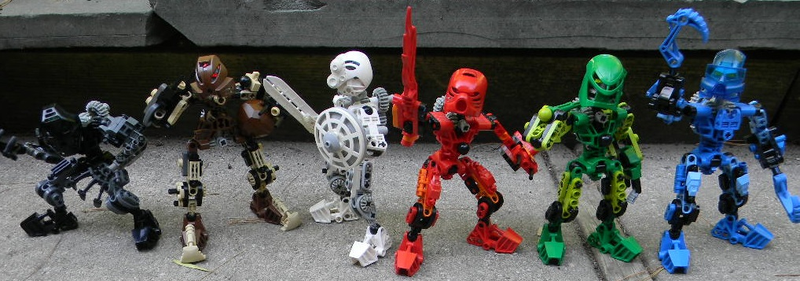
When I was a kid, I used to obsess over this type of Lego called Bionicles. It was more than just blocks and pieces, there was this whole universe about it – movies and comics with heroes and villains and twists and turns, and 5-year old me devoured it all. When I went to Big W with my parents, I would always beg them to buy me a new Bionicle to play with. And usually, out of what I now suspect was a ploy to get me to pipe down, they complied. Little did they know how much these toys would take over my time, thoughts and obsessions.

From the ages of 5 to 7, hours each night were spent on my bedroom floor with swarms of Bionicles pieces in front of me. During these hours, I’d create epic battle scenes, new ‘hybrid’ Bionicles and a complex story with my figures which I thought was honestly pretty good. At the peak of my obsession, I even created a card game out of Bionicles. For each card, I would give each unique Bionicle a name, a ‘description’, some attack/defence stats and draw its face on a piece of paper like a Yu-Gi-Oh card. Looking back, it was absolutely ridiculous but as a kid, I was in my own little world and I loved it.

This strange phase of my life illustrates how my inputs directly influenced my outputs. It was only through my constant input of Bionicles: the movies, comics and buying new figures, that I was able to fuel my ideas of storylines, new figures and even a card game. If I had never taken any of these ‘Bionicles inputs’ in, there is no chance any of these weird ‘Bionicles outputs’ would’ve ever transpired.

Of course, this concept applies to almost all domains. If you want good grades, you’d better learn the lectures. If you want a healthy body, you’d better eat right. And if you want to be an epic Bionicles producer, you’d better have some interest in what the Universe and characters are like. Our outputs are directly influenced by our inputs.

OutputNecessary Input
Good gradesLearn stuff
Healthy bodyEat right
Epic Bionicles ideasObsess over Bionicles

This seems obvious. But due to the enormity of the information available on the internet these days (let alone podcasts, movies or books), there is huge potential for our ideas about ourselves, the world or other people to be radically altered. Whether it’s a subtle Facebook comment or an alarming news headline, the amount and diversity of stimuli out there that we can interact with is astronomical. This means negative and unproductive stimuli can hurt us, inspiring and exhilarating stimuli can build us up, but on unprecedented levels.

Which leads to the idea of the importance of developing ‘intentional inputs’. Whether it’s reading good books, avoiding unproductive pieces of information or having a stronger filter, controlling the ideas and products we input can help make dramatic changes in our outputs, whether that’s ideas, physique or anything in between, illustrating the ever-increasing need to defend our inputs.

I’ll admit, this can be uncomfortable as it creates responsibility on us to decide how we want to see things, and responsibility can be scary. But at the same time, this notion of defending inputs is also remarkably liberating, as the ideas that shape how we see the world can be slowly but surely moulded into something new, if we only decide to choose so. The potential for this is enormous.

So what you need to do, if you really want to broaden your horizons as a listener, is to get exposed to new things. Pick somebody. It doesn’t have to be me…. Find somebody who you trust as a guide, and let them open your ears to these new experiences.

If you do that, you will be rewarded infinitely…

– Ted Giota, from a podcast episode on Conversations with Tyler.

On another note, I’ve been enjoying writing recently and so I’ve decided to write more during this Easter break. Starting today, I’ll aim to write 2 thoughts a week on this online journal: probably on a Sunday and a Thursday. I’ve absolutely no clue how long this’ll last, but we’ll see how it goes. As always, any feedback or comments are always appreciated!